That feeling doesn’t disappear. It just changes.
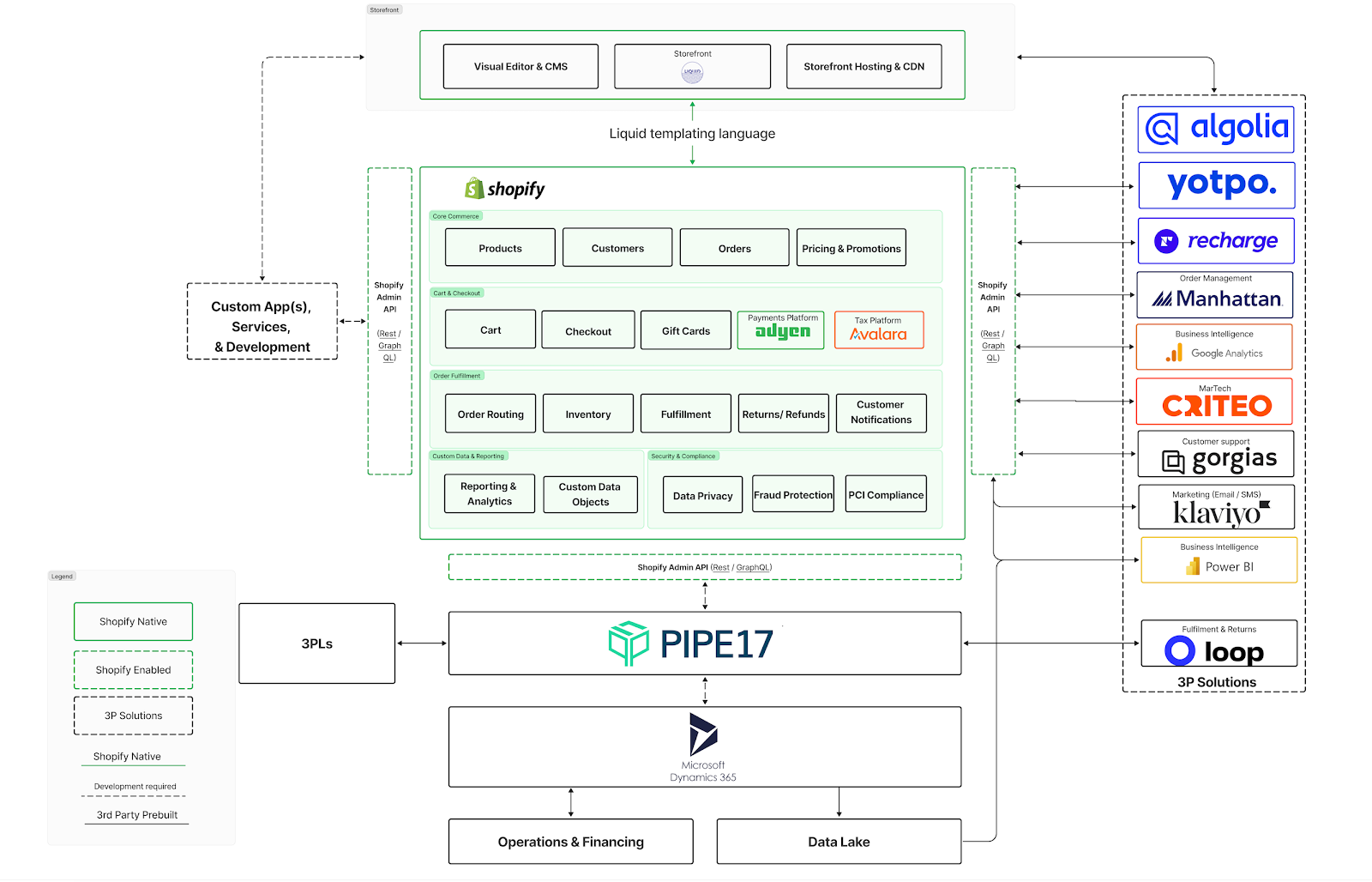
It usually happens quietly. A growing store needs better reporting, so someone adds a SaaS analytics tool. Then comes a CRM. Then inventory gets split across warehouses. Maybe subscriptions enter the picture. Maybe B2B pricing. Each decision makes sense on its own. Together, they turn Shopify into the center of a much larger system.
And that’s when reality sets in.
Shopify was never meant to live alone forever. At scale, it becomes a meeting point for SaaS platforms that were never designed to agree with each other. Businesses reach this stage and suddenly realize they’re not “adding tools” anymore. They’re building connections. Real ones. Fragile ones.
This is usually the moment teams start looking at Shopify and Shopify Plus integration services not because they want customization for its own sake, but because things are already slipping. Data mismatches. Delays. Manual workarounds nobody talks about in meetings.
The problems aren’t dramatic at first. They’re just persistent.
Shopify Is Simple by Design, Not by Accident
Shopify’s biggest strength is restraint. It hides complexity on purpose. Merchants don’t need to know how scaling works or what’s happening on the server. Shopify handles it.
That design philosophy is exactly why integrations become tricky.
Most SaaS platforms assume they’re integrating with systems that expose everything. Deep configuration. Flexible data models. Custom workflows. Shopify doesn’t do that. It has rules, boundaries, and strong opinions about how commerce should work.
Products follow a specific structure. Orders move through defined states. Checkout is protected territory. You can extend parts of it, but you can’t tear it apart and rebuild it freely.
So when a SaaS tool expects behavior Shopify doesn’t support, developers don’t change Shopify. They build around it.
That’s where integration stops being straightforward and starts becoming architectural.
The First Integration Is Easy. The Fifth Is Not.
Most teams underestimate integrations because the first one goes smoothly. Connect a CRM. Sync customers. Done.
Then comes the second. Then the third. Each new SaaS tool brings its own assumptions, timing, and data expectations. Soon, multiple systems are reading and writing the same information.
Which one is right?
Inventory is updated in Shopify, then adjusted in a fulfillment system, then recalculated in a planning tool. Orders move between states depending on who’s asking. Customer records diverge quietly.
None of this breaks loudly. That’s the dangerous part.
Integrations don’t usually fail outright. They drift. Slowly.
APIs Behave Differently Under Pressure
Shopify’s APIs are genuinely good. Clear documentation. Predictable patterns. Easy to start with.
The problems appear when scale enters the conversation.
Rate limits start shaping architecture decisions. Large product catalogs turn simple syncs into long-running processes. Webhooks flood systems during peak traffic. SaaS platforms retry aggressively when responses slow down.
At low volume, these things barely matter. At high volume, they define whether systems stay aligned or fall apart.
Inventory synchronization during flash sales is a classic example. Two systems updating stock levels. One delay. One retry too many. Suddenly overselling becomes very real.
At this point, integration isn’t about connecting systems. It’s about controlling timing, priority, and failure behavior.
Shopify Plus Raises Expectations More Than Limits
Shopify Plus gives teams more power. Higher API limits. Checkout customization. Automation tools that don’t exist on lower plans.
It also changes internal psychology.
Once a business moves to Plus, expectations shift. Stakeholders assume anything is possible now. Developers know better. More control means more responsibility. Checkout logic becomes sensitive. Small errors ripple directly into revenue.
Plus doesn’t reduce complexity. It concentrates it in places where mistakes hurt more.
Teams that respect that tend to thrive. Teams that treat Plus as a magic unlock usually learn the hard way.
Data Mapping Is Where Optimism Slows Down
Integration timelines almost always stretch during data mapping. Not coding. Mapping.
Shopify sees products, variants, collections. A PIM might separate attributes entirely. A CRM may require customer fields Shopify never collected. A subscription platform might treat orders differently from standard purchases.
So questions pile up.
Which system is the source of truth?
When does an order become final?
Who owns customer updates?
What happens when data conflicts?
These aren’t technical questions, even though they feel like they are. They’re business decisions disguised as JSON.
Teams that rush this phase often regret it months later. Data mismatches don’t explode immediately. They leak. Quietly. Until reports stop matching reality.
Webhooks Are Helpful, Not Reliable
Webhooks feel elegant. Event-driven. Immediate.
They’re also misunderstood.
Webhooks can be delayed. They can arrive twice. They can arrive out of order. They can fail silently if endpoints time out. Treating them as guarantees is a mistake.
Stable integrations treat webhooks as signals. They validate events. They log aggressively. They reconcile data regularly.
This work rarely gets attention. It doesn’t look impressive. But it’s the difference between a system that survives growth and one that collapses under it.
Security Becomes a Real Concern, Fast
One SaaS integration is manageable. Several become risky if permissions aren’t planned carefully.
Each tool wants access. Orders. Customers. Inventory. Analytics. Not all of them should have it. Some should never touch sensitive data.
Shopify’s permission model is relatively simple. SaaS platforms often aren’t. OAuth scopes, token rotation, role-based access. On Shopify Plus, where audits and compliance matter, this stops being theoretical.
Security decisions made late slow everything down. Made early, they barely register.
Testing Never Matches Reality
Testing integrations sounds clean in theory. Test stores. Sandbox environments. Controlled data.
Reality is messier.
Shopify test stores don’t behave exactly like live ones. Checkout behaves differently with real payments. SaaS sandboxes often limit features. Some behaviors only appear under real traffic.
So teams test what they can. Then they launch. Then edge cases appear.
Experienced teams expect this. They plan stabilization phases. They monitor logs after launch. They treat early production issues as part of the process.
Teams that promise perfection at launch usually end up firefighting in silence.
Why Custom Integrations Age Better Than App Stacks
Shopify’s app ecosystem is impressive. It solves many problems quickly.
Until it doesn’t.
Each app handles a narrow slice. Stack enough of them and logic overlaps. Performance suffers. Updates break assumptions. Debugging turns into guesswork.
Custom integrations cost more upfront. They also bring clarity. One data flow. One owner. One set of rules.
For growing Shopify and Shopify Plus stores, that clarity becomes valuable fast, especially when SaaS tools manage critical operations like fulfillment, subscriptions, or pricing logic.
SaaS Platforms Don’t Think Like Merchants
Most SaaS tools are built for general use. Ecommerce is not general.
A SaaS platform might optimize for batch updates. Merchants need real-time accuracy. Another might prioritize completeness. Ecommerce prioritizes speed.
Integrations exist to bridge this gap. Pretending it doesn’t exist is how frustration builds on both sides.
Maintenance Is the Cost Nobody Mentions
Integrations don’t end at launch.
APIs change. Shopify evolves. SaaS vendors deprecate endpoints. Business requirements shift. Edge cases multiply.
Without ongoing maintenance, even well-built integrations degrade. Errors accumulate. Manual fixes creep back in.
On Shopify Plus, where automation and traffic spikes leave no margin for error, maintenance is not optional.
What Experienced Teams Get Right
Teams that have been through a few serious Shopify and SaaS integrations tend to behave differently from the start. Not louder. Not faster. Calmer. They’ve already learned that speed at the wrong moment is expensive.
They slow down early instead of rushing to code.
This isn’t hesitation, it’s discipline. Before a single endpoint is wired up, experienced teams spend time understanding the business flows behind the integration. How orders really move through the company. Where data originates. Which numbers leadership actually trusts. They ask questions that feel inconvenient in kickoff meetings but prevent chaos later. Slowing down early means fewer rewrites, fewer emergency fixes, and fewer late nights once real traffic hits the system.
They document assumptions before they turn into bugs.
Every integration is built on assumptions. That an order is “complete” at a certain stage. That inventory updates flow one way. That a customer record lives primarily in one system. Inexperienced teams keep these assumptions in their heads. Experienced teams write them down. Not as formal specs, but as shared references. When something breaks months later, the documentation explains why a decision was made, not just how it was implemented. This saves time, reduces blame, and makes onboarding new developers far easier.
They agree on sources of truth across systems.
This step sounds obvious and is skipped surprisingly often. When multiple SaaS platforms are connected to Shopify, someone must decide which system wins when data conflicts. Is Shopify the authority for inventory, or the ERP? Does the CRM own customer profiles, or does Shopify? Experienced teams settle these questions early and communicate them clearly. This prevents silent data drift, where reports look fine individually but never match across systems.
They design for failure, not ideal conditions.
Real systems fail. APIs time out. Webhooks arrive late. SaaS platforms have outages. Experienced teams assume this will happen and build accordingly. They include retries, validation, logging, and fallback syncs. They make peace with the idea that perfection isn’t realistic, resilience is. This mindset turns small incidents into minor annoyances instead of full-blown operational crises.
Most importantly, they treat Shopify SaaS integration as a product decision, not a background technical task.
This is the difference that changes everything. When integrations are treated as “just engineering work,” they get rushed, under-scoped, and under-maintained. When they’re treated as part of the product, decisions involve product managers, operations, and leadership. Trade-offs are discussed openly. Long-term impact matters. The integration becomes something the business understands and supports, not a fragile system hidden in the codebase. That shift alone often determines whether an integration quietly works for years or becomes a constant source of tension.
End Notes
Shopify makes ecommerce accessible. SaaS tools make it powerful. Connecting the two is where things get complicated.
The problems don’t come from broken platforms. They come from assumptions. That Shopify’s simplicity scales forever. That APIs behave perfectly. That systems agree by default.
They don’t.
Well-planned integrations turn Shopify into a flexible, reliable core. Poorly planned ones quietly drain time, money, and trust.
The difference isn’t the technology. It’s how seriously the connections are treated from the very beginning.